2 hours ago
Behind Closed Doors: How Josh Cavallo Became the Secret Mentor to Soccer's Hidden LGBTQ+ Athletes
READ TIME: 5 MIN.
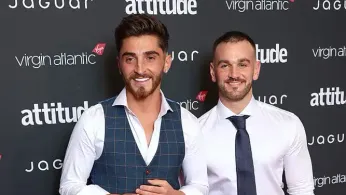
When Josh Cavallo came out as gay in 2021, becoming the first male footballer to do so in a top-flight league, the world watched. Half a million messages flooded in within thirty minutes. News outlets across the globe covered his announcement. Pride organizations celebrated. But what few people knew was that Cavallo's coming out would spark something quieter, more intimate, and arguably more transformative: a secret mentorship network for athletes who weren't ready to follow his path.
In a recent appearance on the podcast "We Need To Talk" hosted by Paul C Brunson, the 26-year-old Australian left back—now playing for Peterborough Sports in England—opened up about the hidden work he's been doing behind the scenes. "I helped mentor a lot of closeted athletes and a lot of Olympians, a lot of football players that aren't out and don't want to be out," Cavallo revealed, describing a support system that operates in the shadows of professional sports.
What makes Cavallo's mentorship distinctive is his radical acceptance of where people are in their journey. He doesn't push. He doesn't pressure. He simply holds space—something he never had access to when he was struggling with his own identity. "They're happy to come out next year or in 10 years time. Or they just don't want to come out at all," Cavallo explained, underscoring a truth that often gets lost in mainstream LGBTQ+ narratives: coming out isn't a universal goal, and the timeline for visibility is deeply personal.
To understand why Cavallo's mentorship matters so profoundly, it's essential to grasp what he himself endured. For years, he wore what he describes as a perpetual mask—one he never took off, not even at home. "I wore a mask 24/7," Cavallo told Brunson, recounting the exhaustion of performing straightness in every context: dressing rooms, family gatherings, dating scenarios engineered to deflect suspicion.
The fear was paralyzing. Cavallo worried constantly about disappointing his family, destroying his career, and becoming "the next Justin Fashanu"—a haunting reference to Britain's first openly gay professional footballer, whose tragic death in 1998 loomed large in Cavallo's consciousness as a cautionary tale. When he finally resolved to come out at age 20, the anxiety was so overwhelming that he couldn't even confide in a therapist, convinced that doing so would expose him.
The isolation was suffocating. He came out to strangers on dating apps long before telling anyone in his real life—reaching out anonymously to the man who would eventually become his fiancé, Leighton, only to be blocked when Leighton assumed he was a catfish. It took Cavallo's coming-out video going viral for Leighton to realize who he was and reach back out—a bittersweet reunion born from years of hidden longing.
Cavallo didn't set out to become an advocate. When he came out in 2021, he was simply trying to live authentically. But the sheer volume of responses—the half-million messages, the global media attention, the stories from people in countries he'd never heard of reaching out for support—shifted something in him. "I didn't go into this thinking that I would be an advocate in this space," he reflected. "But to see the movement that this had across the world of an international level and see the people this reached, in countries that I never heard of before, and then reaching out for support, is when I knew I have a responsibility."
That responsibility manifested in unexpected ways. Beyond the public speaking engagements and media appearances, Cavallo began fielding private requests for support from athletes living double lives. These weren't casual conversations; they were lifelines. People were using him as their reference point, their proof that it was possible to survive coming out in professional sports.
What Cavallo offers these athletes is something rare: a safe space with someone who genuinely understands the specific terror of being a closeted professional athlete. "Because I couldn't do that," he emphasized, referring to the lack of mentorship he had access to during his own struggle. He became the mentor he needed.
Yet even as Cavallo mentors others toward whatever version of authenticity feels right for them, he's acutely aware that professional football itself remains fundamentally hostile to LGBTQ+ people. The numbers are stark: only six openly gay professional male footballers exist worldwide, and not a single one plays in the Premier League.
Cavallo believes the environment is worsening, not improving. "I think we're struggling," he told Brunson bluntly. "I think in the society of today, especially in sport and the way we're heading in this world, it's only going to get worse and tougher." This isn't abstract concern; it's rooted in lived experience. Cavallo has been physically targeted. He describes being confronted at a petrol station by a man shouting homophobic abuse and threatening violence—an incident that left him fearing for his life and briefly questioning whether coming out had been worth it.
The incident shook his family, who worried for his safety. But Cavallo ultimately refused to be silenced. "If you have an issue with me, that's your problem," he stated with a defiance born from hard-won self-acceptance. Still, the fact that such incidents occur speaks volumes about why so many athletes remain closeted—and why Cavallo's quiet mentorship network is so vital.
Despite acknowledging that he can't single-handedly solve the systemic homophobia embedded in professional sports, Cavallo has positioned himself as a "building block" for change. "It's pretty sad that people will hide themselves just because they're a professional athlete. And this is a space where I can't give you the solution, but I can help be a building block and to make sure the next person coming through is okay and can be loud and proud."
This philosophy extends to his public work as well. Cavallo recently participated in Football Pride 2025, an event organized by Football v Homophobia, where he joined a panel exploring the experiences of LGBTQ+ people pursuing professional careers in football. The discussion covered not just the experiences of players and coaches, but also the burning issues facing queer fan groups—including the controversial decision by the Premier League to replace Rainbow Laces, a symbol of solidarity that had been embraced by many in the football community.
As Cavallo continues his work—both visible and invisible—his message to the broader LGBTQ+ community remains consistent and powerful. "Be unapologetically yourself," he urges. "Don't apologise for how you look or act. Don't let worrying what others think make you neglect who you are."
Yet Cavallo also understands that this advice, while aspirational, isn't universally applicable—not yet, anyway. For the athletes he mentors in secret, unapologetic authenticity might still be years away, or might never align with their personal goals. And that's okay. Cavallo's greatest contribution may not be his visibility as an out gay footballer, but rather his willingness to create and hold space for those who aren't ready to be visible—proving that there are multiple ways to live truthfully, and that support doesn't require a spotlight.